
Traditional SEO won’t protect your law firm from disappearing as AI platforms like ChatGPT reshape how clients find solicitors—but 34% of UK firms are already investing over £100,000 to dominate this new search landscape before their competitors catch on.

Key Takeaways:
- AI Search Optimisation (AISO) is revolutionising how UK law firms get discovered, focusing on content that appears in AI-generated summaries rather than traditional search rankings
- Five emerging trends are transforming legal marketing: hyper-personalised client engagement, conversational AI chatbots, enhanced content creation, predictive analytics, and voice search optimisation
- Early adopters are seeing significant growth in AI-driven search traffic while traditional SEO-only firms experience declining visibility
- SRA compliance requirements still apply to all AI marketing implementations, making human oversight essential
- UK law firms are investing heavily in AI technology, with 34% planning to spend over £100,000 in the coming year
The digital marketing landscape for UK legal professionals has undergone a dramatic transformation. Traditional search engine optimisation alone no longer guarantees visibility when potential clients increasingly rely on AI platforms like ChatGPT, Perplexity, and Google AI Overviews for instant answers. Law firms, solicitors, and barristers must now master AI Search Optimisation (AISO) to remain competitive and discoverable in this evolving ecosystem.
Why AI Search Optimisation Is Transforming Legal Visibility
The rules of search have fundamentally changed. AI Search Optimisation, also known as Generative Engine Optimisation (GEO), represents a new layer of search optimisation designed specifically for AI systems. Unlike traditional SEO that focuses on website rankings, AISO concentrates on getting legal content recognised and featured inside AI-generated summaries and conversational responses.
This shift matters because AI-generated answers from platforms like Google AI Overviews, ChatGPT, Perplexity, and Bing Copilot often answer legal questions directly, reducing the need for users to click through to law firm websites. The challenge lies in creating content that AI systems trust enough to cite and feature prominently in their responses.
Law firms that adapted early by building answer-focused content and pursuing citations in AI systems have reported significant year-over-year growth in AI-driven search traffic. Meanwhile, those relying solely on traditional SEO strategies have seen their visibility decline as potential clients find immediate answers through AI platforms without ever reaching firm websites. Omni Marketing’s specialised guide outlines proven strategies that UK solicitors are using to improve their AI search visibility and capture this emerging traffic source.
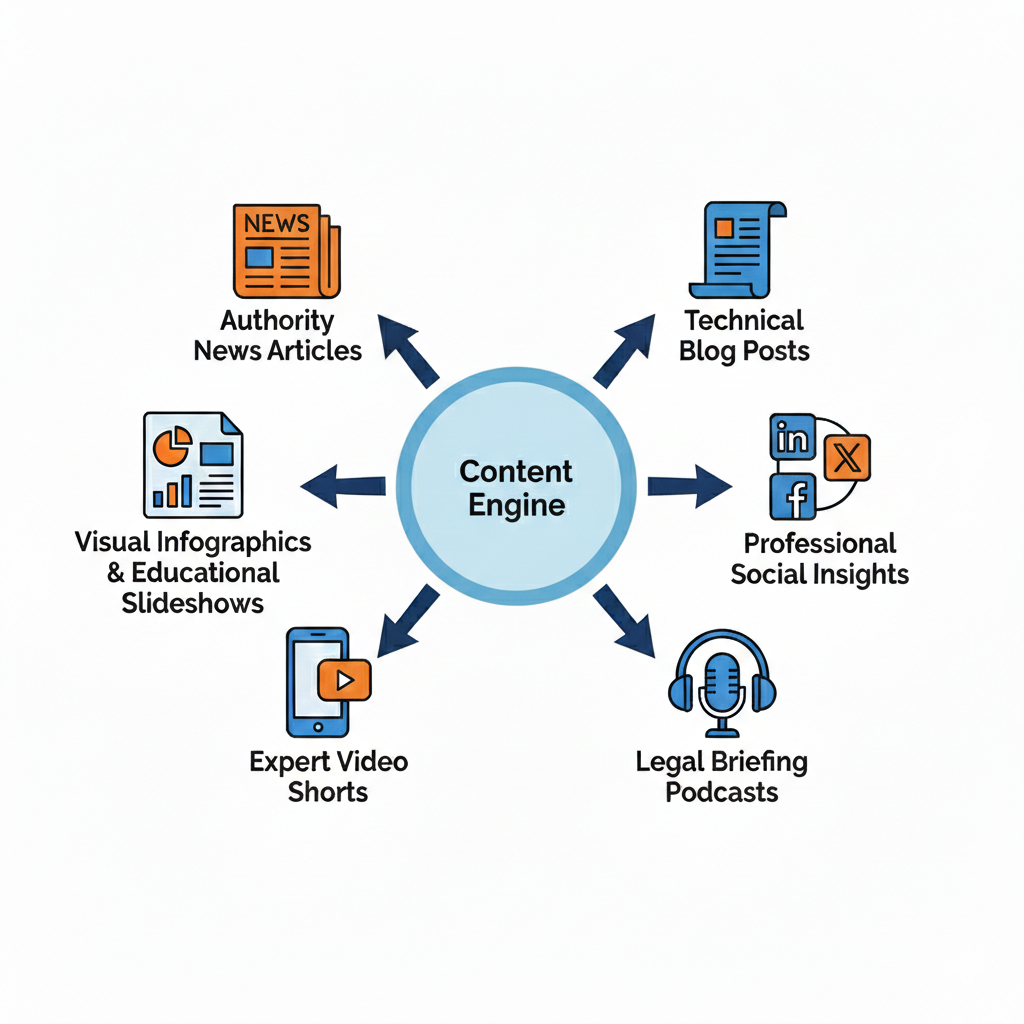
Five Emerging AI Trends Reshaping Legal Marketing
Several transformative trends are converging to redefine how law firms attract and engage clients in the AI era. These developments represent fundamental shifts in client acquisition strategies that forward-thinking legal professionals are leveraging for competitive advantage.
1. Hyper-Personalised Client Engagement Through AI Data Processing
Modern AI tools analyse client data—including case history, demographics, and behavioural patterns—to craft personalised messages, content recommendations, and service suggestions that resonate specifically with each prospect. This level of personalisation extends beyond basic demographic targeting to include sophisticated analysis of legal needs, communication preferences, and decision-making triggers.
Law firms implementing hyper-personalisation are expected to achieve significantly higher engagement rates and conversion improvements. The technology enables solicitors to demonstrate deep client understanding from the first interaction, creating immediate trust and differentiation in saturated legal markets. This approach proves particularly effective for complex legal services where clients require confidence in their solicitor’s expertise and attention to individual circumstances.
2. Conversational AI and Legal Chatbots for 24/7 Client Service
AI-powered chatbots have evolved far beyond basic frequently asked questions into sophisticated virtual assistants capable of handling nuanced client interactions around the clock. These advanced systems provide tailored legal information, schedule consultations, and pre-qualify leads by assessing client needs through intelligent conversation flows.
The technology enables immediate value delivery whilst reducing friction in the client journey, resulting in boosted conversion rates and improved overall client satisfaction. Modern legal chatbots can understand context and assist with lead qualification by assessing client needs through intelligent conversation flows, ensuring qualified leads reach solicitors whilst filtering out inappropriate enquiries. Some advanced AI systems can also provide relevant case law references and guide through initial legal assessments.
3. AI-Enhanced Content Creation and SEO Optimisation
AI tools assist law firms in content marketing by identifying high-impact topics, generating SEO-friendly drafts, and summarising complex legal material into digestible insights. This capability allows firms to accelerate content marketing efforts whilst maintaining the authoritative voice required for legal credibility.
By harnessing natural language generation combined with legal expertise, firms maintain steady streams of authoritative, compliant content that improves search visibility on AI-powered platforms. The key lies in using AI for initial research and drafting phases whilst ensuring qualified solicitors review and refine all content for accuracy, tone, and brand consistency.
4. Predictive Analytics for Strategic Marketing Investment
AI analyses past marketing performance, client behaviour patterns, and broader market trends to forecast which legal services and marketing channels will deliver optimal return on investment. This foresight helps firms invest strategically in campaigns and automate adjustments, optimising marketing spend with unprecedented precision.
Predictive analytics enables proactive rather than reactive marketing decisions, allowing law firms to anticipate client needs, seasonal demand fluctuations, and emerging legal service opportunities. This strategic advantage proves particularly valuable in competitive practice areas where timing and positioning determine success.
5. Voice Search and AI-Driven Video Content Optimisation
Voice and visual search optimisation are gaining significant traction as AI platforms increasingly support multimodal queries. Law firms must now adapt their SEO strategies for voice-activated searches and image or document-based retrieval systems.
This evolution requires optimising for natural, conversational phrases used in voice searches and ensuring all visual content includes rich metadata. The expansion of search modalities opens new pathways for client discovery, particularly for local legal services where voice searches often include location-specific queries and immediate service needs.
AI Tools Delivering Results for UK Solicitors
Several AI platforms have emerged as particularly effective for UK legal practices, with documented benefits and proven track records. The landscape includes both specialised legal AI tools and broader marketing platforms adapted for legal service requirements.
Documented Benefits from Law Firm AI Adoption
Fletchers Solicitors, a UK medical negligence firm, partnered with the University of Liverpool to develop an explainable AI tool that assesses the likelihood of a case’s success. This innovation has streamlined case reviews and improved accuracy in client consultations, ultimately enhancing the firm’s ability to provide precise guidance to potential clients.
Mid-sized law firm VWV invested approximately £250,000 in AI technology and collaborated with Robin AI, involving trainee solicitors to improve efficiency in tasks like contract reviews and drafting reports. This investment has freed senior solicitors to focus on client relationship building and strategic case management, improving both service quality and business development outcomes.
These case studies demonstrate that AI adoption extends beyond marketing into core practice management, creating operational efficiencies that indirectly support marketing efforts by improving service delivery and client satisfaction.
Key Features for Legal Marketing Success
While many AI tools are emerging for UK law firms, some platforms like Harvey are recognised for their capabilities in document review and case preparation, which indirectly improve content quality and client service. For marketing automation and client acquisition, firms are exploring various AI-powered solutions that integrate with practice management systems.
Providers like Access Legal offer case management solutions, and many legal tech platforms are increasingly integrating client communication and marketing functionalities to streamline operations. These platforms share common success factors: intuitive interfaces, strong UK law compliance features, and seamless integration with existing practice management systems.
The most successful implementations prioritise tools offering robust automation of client intake processes, advanced natural language processing designed for UK legal contexts, and data-driven metrics demonstrating clear improvements in client engagement and lead conversion.
SRA Compliance and AI Marketing Requirements
Professional conduct obligations remain paramount when implementing AI marketing strategies. The Solicitors Regulation Authority maintains oversight of legal practice standards, including technology adoption and client service delivery.
Professional Conduct Rules for AI Implementation
The Solicitors Regulation Authority has not created AI-specific regulations, but existing professional conduct rules concerning confidentiality, competence, and client service apply to AI use in legal practice. This regulatory framework ensures that technology adoption does not compromise professional standards or client protection.
The SRA emphasises that solicitors remain fully responsible for their work and client service quality, even when using advanced technology. This responsibility makes human verification of AI outputs required to avoid issues like AI hallucinations or inaccurate legal guidance that could compromise client interests or professional standing.
Compliance requires implementing robust review processes where qualified solicitors verify all AI-generated content before publication or client communication. This oversight ensures accuracy, maintains professional tone, and preserves the personal touch required for legal service relationships.
GDPR Considerations and Data Protection Standards
AI marketing implementation must align with GDPR requirements and UK data protection standards. This includes careful data handling protocols, explicit client consent where personal information is processed, and selecting AI solutions vetted for compliance with privacy regulations.
Responsible AI use actually strengthens client trust by improving transparency in data processing and protection. Law firms must document their AI use policies, maintain clear audit trails, and ensure all client data processing meets regulatory standards. This compliance framework protects both clients and firms whilst enabling advanced marketing approaches.
Best practice involves conducting regular compliance audits, maintaining detailed records of AI system usage, and providing clear client disclosure about technology adoption in service delivery and marketing processes.
Common Challenges Law Firms Face with AI Implementation
Despite the clear benefits, law firms encounter predictable obstacles when integrating AI into their marketing and practice management systems. Understanding these challenges enables proactive planning and successful implementation.
Key Barriers to Successful AI Integration
Many firms deploy AI tools expecting instant results without developing strategic approaches. AI should complement broader marketing approaches focused on the firm’s unique expertise and UK legal market positioning rather than replacing human input entirely. This strategic foundation prevents scattered implementation efforts that fail to deliver measurable outcomes.
Data quality and relevance represent another significant challenge. AI marketing algorithms require high-quality, current, and specific information to produce effective outputs. Feeding AI generic or outdated information results in poor performance, reducing search visibility and client engagement. Legal practices must continuously audit and refine their content to ensure relevance and accuracy.
Team training deficiencies often undermine AI adoption success. Introducing advanced technology without adequate staff education leaves teams underutilising capabilities or making errors that affect client perception and professional standards. This challenge particularly impacts smaller firms with limited training resources.
Best Practices for Addressing AI Implementation Challenges
Successful AI integration requires establishing clear objectives that define success metrics, whether improving AI search rankings, generating qualified leads, or building brand recognition. These objectives direct how AI tools are selected, implemented, and evaluated for effectiveness.
Investing in quality content development ensures AI systems have robust source material for generating effective outputs. This includes creating detailed resource libraries, maintaining current legal information, and developing content specifically designed for AI platform recognition and citation.
Training programmes bridge the knowledge gap between technology capabilities and practical application. Regular upskilling sessions ensure lawyers and marketing staff collaborate effectively with AI systems whilst maintaining professional standards and client service quality.
Implementing structured human oversight workflows ensures all AI outputs receive qualified review before client interaction. This quality control maintains professional standards whilst maximising AI efficiency benefits.
Start Building Your AI-First Legal Marketing Strategy Today
The transformation of legal marketing through AI presents both unprecedented opportunities and complex challenges for UK law firms. Success requires strategic adoption of proven AI technologies combined with unwavering commitment to professional standards and client service excellence.
UK law firms are planning significant investments in technology, with 34% of firms set to invest over £100,000 in the next year, indicating AI has become a cornerstone of modern legal practice. This investment level reflects the recognised importance of staying competitive in an increasingly AI-driven marketplace.
The most successful implementations focus on enhancing rather than replacing human expertise. AI tools excel at automating routine tasks, analysing large datasets, and providing initial content drafts, but qualified solicitors remain required for strategic decision-making, client relationship management, and ensuring all outputs meet professional standards.
Building an effective AI-first marketing strategy requires patience, investment, and commitment to continuous learning. Firms that approach AI adoption strategically—with clear objectives, adequate training, and robust compliance frameworks—position themselves for sustained growth and enhanced client service in the evolving legal landscape.
The competitive advantage belongs to firms that act decisively whilst others hesitate. Early AI adoption provides valuable experience, refined processes, and established market positioning that becomes increasingly difficult for competitors to match over time.
For expert guidance on implementing AI search visibility strategies tailored specifically for UK legal professionals, visit the specialised resources and proven methodologies available at Omni Marketing Agency.